

When Oaxaca Ate Without Tortillas: Pre-Hispanic Gastronomy in the City
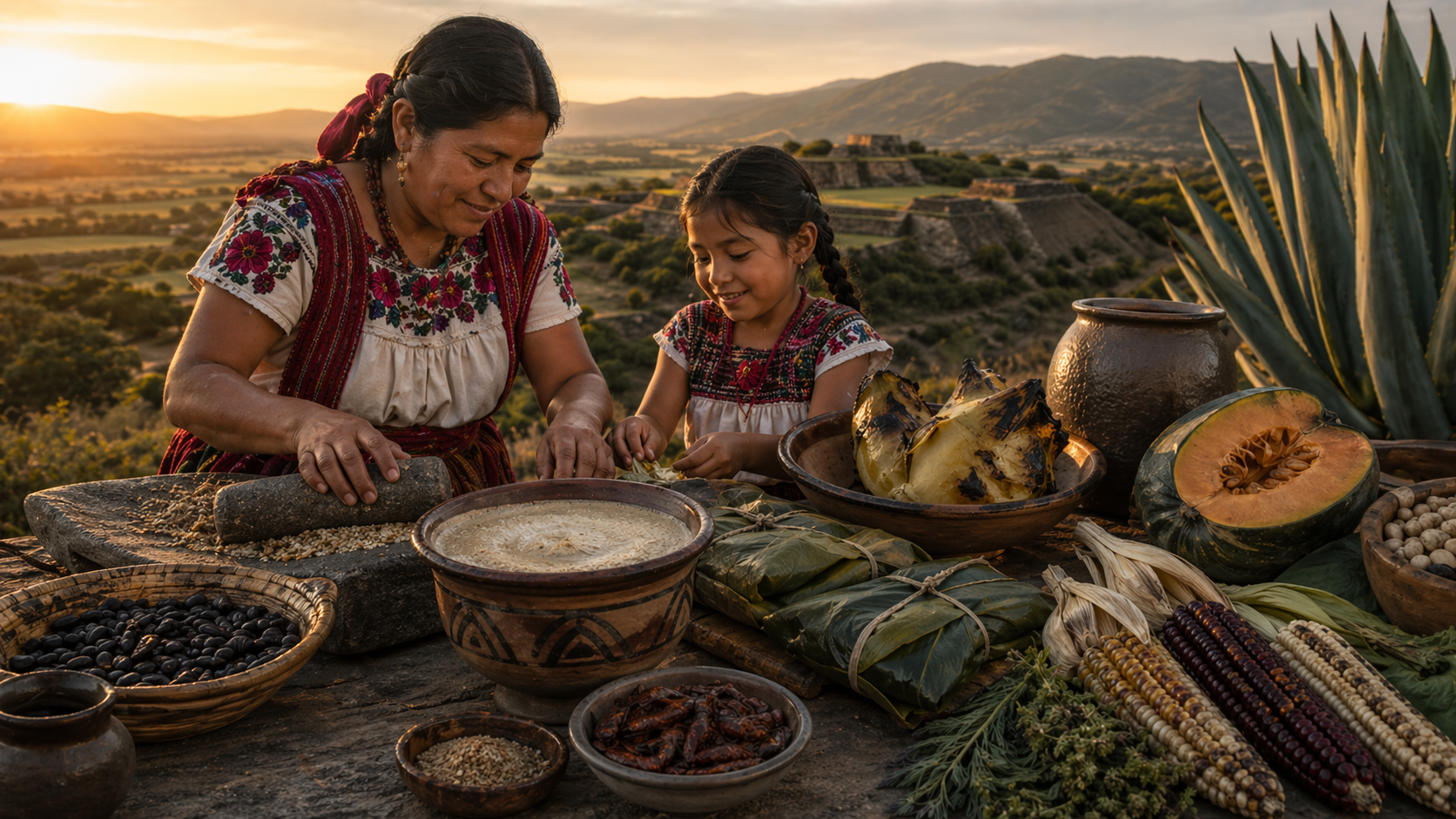
A landscape that fed a civilization
In Oaxaca, food history begins long before the familiar image of fresh tortillas on a hot comal. For thousands of years, the valleys and hills around what would later become Monte Albán nourished communities through a careful relationship with native plants, seasonal harvests, and practical cooking methods shaped by the land itself. The result was a cuisine that was already rich, varied, and highly adapted before the tortilla became a daily staple.
This early gastronomy grew from observation and patience. The inhabitants of the Oaxaca Valley learned which plants could be domesticated, how fire could transform difficult ingredients into nourishing food, and how different elevations offered different resources. Their meals were not simple improvisations. They were part of a deep ecological system that supported village life and later helped sustain one of the great urban centers of ancient Mesoamerica.
Guilá Naquitz and the first cultivated foods
One of the best places to begin this story is Guilá Naquitz, a cave site near Mitla that has provided some of the earliest evidence of plant domestication in the Americas. Archaeological research from the cave points to a long process in which mobile groups gradually began to rely more heavily on cultivated resources. Squash appears especially early in this record, followed by other useful crops that helped create a more stable food base.
Long before fully domesticated maize took its central place, people in the valley were already experimenting with local species and learning how to improve them over generations. Squash seeds offered nutrition, durable rinds could serve as containers, and beans added important balance to the diet. These developments were practical, but they also marked a profound turning point. Food production made longer settlement possible, and settlement would eventually make cities possible.
Before the tortilla, there were tamales and atole
One of the most interesting features of early Oaxacan food is that maize was not first consumed as tortillas. For much of ancient Oaxaca’s history, the main preparations were tamales and atole. This reflects both available technology and household rhythm. Without the widespread use of the comal in earlier periods, steaming and boiling were more practical methods for preparing nixtamalized maize.
Tamales were especially important because they were portable, filling, and adaptable. Masa could be wrapped in husks or leaves and cooked in clay vessels or earth ovens, then carried to fields, workshops, or ceremonial gatherings. In pre-Hispanic Oaxaca, tamales likely varied greatly in texture and filling, drawing on local ingredients such as turkey, fish, frogs, insects, or seasonal herbs. Atole, meanwhile, offered a sustaining drink made from maize, one that could be simple or enriched depending on occasion and status.
Maguey, resilience, and the food of the hills
While the valley floor supported the milpa system of maize, beans, and squash, the surrounding hills offered another essential resource: maguey. In dry and rocky terrain where other crops struggled, agave could store energy and moisture in its heart. Roasted slowly in earth ovens, the plant became a sweet and durable food that could sustain communities through difficult seasons and long journeys.
Maguey was much more than a backup crop. It provided fiber, food, and sap that could be used for fermented beverages. Archaeological evidence from parts of Oaxaca suggests that communities built entire local economies around agave products, exchanging them for crops from more fertile areas of the valley. This highland and lowland relationship helped connect different ecological zones and made the region more resilient as population increased.
Monte Albán and the changing pace of food
Around 500 BC, the foundation of Monte Albán changed both politics and everyday life in the Oaxaca Valley. A city built on a leveled mountaintop needed a constant flow of food and materials from surrounding communities. As the population grew, domestic cooking adapted to new urban rhythms, and the archaeological record begins to show the greater importance of the comal. This shift helped support faster preparation of maize foods and likely encouraged the wider use of tortillas.
Urban life also encouraged specialization and exchange. Communities in different branches of the valley could focus on corn, pottery, salt, fibers, or other regional products, then bring them into circulation through market networks. In this setting, cuisine became more layered and dynamic. Ingredients from different microclimates met in one place, and Oaxacan cooking developed the complexity for which it is still admired today.
Protein from insects, birds, and wild game
Pre-Hispanic Oaxaca drew protein from sources that were practical, seasonal, and deeply rooted in the local environment. Chapulines, the toasted grasshoppers still famous in Oaxaca today, were an efficient and valued food. Harvested during the rainy season, they could be seasoned and eaten as a staple rather than as a novelty. Chicatanas, the winged ants that appear after the first heavy rains, were also prized for their rich flavor and are still celebrated in contemporary Oaxacan cuisine.
Archaeological evidence also points to the domestication of turkey in Zapotec contexts, especially in and around Monte Albán. Alongside turkey, people consumed wild animals such as deer and rabbit when available. This mix of insects, birds, and small game reflects a cuisine that was highly adapted to place and season. It was efficient, sustainable, and nutritionally diverse without relying on the livestock introduced centuries later.
Tejate, herbs, and the flavor of the valley
Few drinks express the continuity of Oaxacan food culture better than tejate. Prepared from toasted maize, cacao, mamey seed, and aromatic flor de cacao, it remains one of the region’s most distinctive beverages. Its preparation still requires labor, rhythm, and experience, and its frothy surface has long been associated with richness and care. In ancient and modern Oaxaca alike, tejate is not only refreshing. It is nourishing and culturally meaningful.
The broader flavor profile of pre-Hispanic Oaxaca came from native herbs and greens rather than imported spices. Quelites, epazote, hoja santa, guaje, and pitiona brought freshness, bitterness, aroma, and depth to everyday cooking. These ingredients were used not just for taste, but also for nutrition and digestive balance. They gave Oaxacan food its local identity long before garlic, cinnamon, or wheat entered the region.
An ancient table with a lasting legacy
Looking at this earlier culinary world makes one thing clear: Oaxaca did not wait for tortillas to become a food culture of great sophistication. The people of the valley had already developed a powerful system based on maize, maguey, insects, wild greens, cacao, and careful cooking technologies such as the metate, molcajete, clay pots, and earth ovens. Their foodways supported daily life, ritual obligations, trade, and eventually urban civilization.
Even after the arrival of Spanish ingredients in the 16th century, the underlying structure of Oaxacan cuisine remained deeply indigenous. The methods of toasting, grinding, steaming, and combining native ingredients continued to shape the table. Today, when travelers encounter tejate in a market, chapulines at a stall, or the scent of roasted agave in the countryside, they are experiencing more than tradition. They are meeting a living memory of the ancient Oaxaca Valley, where people learned to turn the gifts of the land into one of Mexico’s most enduring culinary legacies.