

Best Oaxaca gastronomic festivals in 2026: where to enjoy mezcal, mole, and local traditions
Why Oaxaca’s 2026 food festival season is worth planning around
Oaxaca is one of the rare destinations where food, ritual, agriculture, and public celebration still feel deeply connected. In 2026, that connection becomes especially vivid through a full calendar that stretches from the Oaxaca Food and Wine Festival in late February to Lenten street traditions in March and the major mezcal and mole fairs linked to Guelaguetza season in July. For travelers who want more than a restaurant list, this is the year to experience Oaxaca as a living culinary culture.
What makes these events so compelling is their range. Some are polished and curated, with fixed venues, paired tastings, and chef-driven menus. Others are wonderfully public and communal, unfolding in plazas, neighborhood streets, markets, and small towns where tradition is not being performed for outsiders, but simply lived in front of you.
The first major stop: Oaxaca Food and Wine Festival, February 25 to March 1
The Oaxaca Food and Wine Festival opens the year with a more structured and upscale experience, but it still stays rooted in local identity. The 2026 program is set for Wednesday, February 25 through Sunday, March 1, and the venues themselves help tell the story. The opening gala takes place at Hotel Flavia in San Felipe del Agua, with transportation departing at 5:30 PM from across from the Grand Fiesta Americana in El Llano Park. From there, the schedule moves through El Tendajón Agavería, MURO in the Fortín area, Ancestral Cocina Tradicional in Xochimilco, Reforma 201, El Olivo Gastrobar, Casa Convite, and finally Origen.
This festival works especially well for travelers who want Oaxaca presented as a sequence of ideas. One day highlights Mexican wine and contemporary design. Another centers on mezcal education. Another leans into ancestral technique, open-fire cooking, or the communal symbolism of Guelaguetza. It feels less like a single fair and more like a guided journey through several versions of Oaxaca at once.
- Opening venue: Hotel Flavia, San Felipe del Agua
- Meeting point: across from Grand Fiesta Americana at El Llano Park
- Notable final event: Guelaguetza Brunch at Origen with wines from Dos Buhos
- Best for: travelers who enjoy chef-led programming, pairings, and a polished festival atmosphere
- VIP option mentioned in reviews: about $909 USD for the full eight-event experience
Spring events that feel intimate and distinctly local
After the February festival, Oaxaca’s food calendar becomes more neighborhood-based and public. On Friday, March 13, 2026, Día de la Samaritana fills the city with decorated tables and free aguas frescas offered by churches, businesses, and residents. It is one of the warmest traditions in Oaxaca because it turns hospitality into a citywide act. For visitors, it feels like a spontaneous tasting route built around horchata, jamaica, tamarindo, and other refreshing drinks.
Then, on Palm Sunday, March 29, 2026, the Feria del Tejate in San Andrés Huayápam offers one of the most fascinating beverage experiences in Oaxaca. The village sits about 15 kilometers north of the city and is known for tejate, a pre-Hispanic drink made from toasted maize, cacao, mamey pits, and rosita de cacao. Watching tejateras froth the drink by hand in wooden basins is part of the reason to go. It is not just something to taste. It is something to witness.
- Día de la Samaritana: Friday, March 13, 2026
- Best experience: wander on foot around central Oaxaca from midday onward
- Feria del Tejate: Sunday, March 29, 2026, in San Andrés Huayápam
- Why it matters: one of the clearest opportunities to see pre-Hispanic beverage culture still practiced in community
The mezcal fair in July is more than a tasting. It is Oaxaca in one concentrated place.
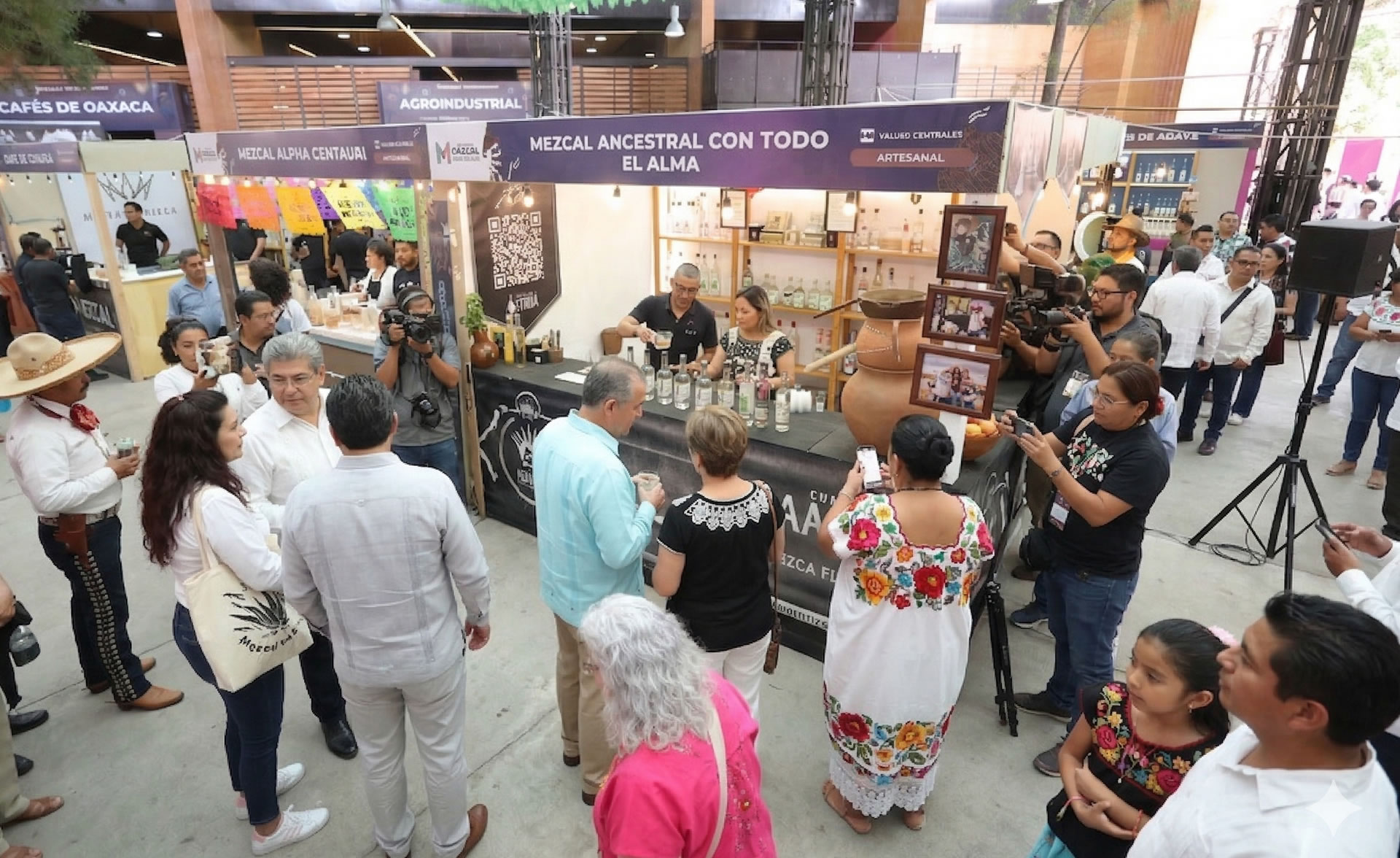
If you are deciding which single food event deserves a place on your calendar, the Feria Internacional del Mezcal 2026 makes a very strong case. It is projected to run from July 17 to August 7 at the Oaxaca Cultural and Convention Center, or CCEO, in Santa Lucía del Camino. This is not a tiny boutique tasting. It is one of the defining events of the season, bringing together more than 70 certified mezcal brands and around 125 participating companies overall. In practical terms, it means you can meet producers, compare styles, ask questions, and buy bottles directly in one place while the city is already energized by Guelaguetza festivities.
For many travelers, mezcal starts as a drink and becomes a lens. The fair makes that shift possible because it puts the agricultural and technical side of mezcal in front of you. You begin to notice the difference between wild agaves like Tepeztate, Tobalá, and Arroqueño. You begin to hear why one producer speaks proudly about clay-pot distillation while another explains copper stills and brick ovens. Instead of leaving with the old idea that mezcal simply tastes smoky, you start to notice fruit, minerality, herbs, earth, floral notes, and texture.
That is what makes this fair so persuasive. It gives you the chance to understand mezcal at the source, with the people who actually produce it. If you love food and drink travel, this is one of those experiences that can permanently change the way you taste.
- Venue: Oaxaca Cultural and Convention Center, Santa Lucía del Camino
- Projected dates: July 17 to August 7, 2026
- Main peak period: July 17 to 28
- Approximate admission: about 75 to 150 pesos, with seniors and children listed as free
- Transportation: free shuttle service from El Llano Park
- Best time for atmosphere: after 4:00 PM for music and a livelier crowd
- Best time for learning: earlier visits starting around 11:00 AM
If you want the best return from a visit, slow down and compare categories. Artisanal mezcal is the most common premium tier and often uses brick ovens and copper stills. Ancestral mezcal is more limited and prestigious, with fermentation in wooden barrels and distillation in clay pots. Ask producers what agave you are tasting, how long it matured, and whether the profile is meant to highlight fruit, earth, smoke, or minerality. That short conversation can easily become the highlight of the afternoon.
The mole fair is where Oaxaca’s culinary depth becomes impossible to ignore
If the mezcal fair is your best introduction to Oaxaca’s iconic spirit, the Festival of Moles is one of the strongest arguments for why Oaxaca remains one of the great food capitals of Mexico. It is typically held in the second half of July at the Centro Gastronómico on Avenida García Vigil, and it gathers the canonical seven moles of Oaxaca along with regional variations from the Coast and the Isthmus. This matters because mole is not just one sauce. It is a whole culinary universe shaped by geography, ingredients, memory, and time.
What makes this fair so appealing for a traveler is the chance to compare styles side by side. Instead of reading a list and trying to imagine the difference, you can taste how mole negro leans deep, velvety, and complex, how coloradito balances sweet and spicy notes, or how amarillo can feel brighter and more herbal. You may also encounter manchamanteles with its fruit-acid profile or chichilo, often described as one of the rarest and hardest to find outside special menus. For a serious eater, that alone makes the event tempting.
There is also something emotionally convincing about mole in Oaxaca. These sauces carry labor. They involve grinding, roasting, blending, balancing, and often a great deal of patience. To taste several in one setting is to appreciate not just flavor, but care. That is why the fair tends to stay with people long after the trip is over.
- Typical venue: Centro Gastronómico, Avenida García Vigil
- Typical season: second half of July
- What to expect: the seven classic Oaxacan moles plus regional interpretations
- Why plan ahead: tickets are often in demand and may require advance purchase through participating restaurants such as Las Quince Letras or Tierra del Sol
- Mole negro: deep black, velvety, smoky, sweet, and often paired with turkey or chicken
- Coloradito: red-brown, smooth, sweet-spicy, and a classic with pork or enchiladas
- Amarillo: vibrant yellow, herbal, and often thickened with masa
- Verde: bright and fresh, with a greener, more herb-forward profile
- Rojo: chili-forward and robust
- Manchamanteles: fruitier and more acidic, often with pineapple or plantain notes
- Chichilo: earthy and smoky, often the one food-focused travelers most hope to find
Other July food fairs that make the season feel abundant
July does not stop with mezcal and mole. The city and its surrounding communities fill out the season with fairs that make Oaxaca feel almost impossible to finish tasting. Semana de los Antojos, held next to the Mezcal Fair at the convention center, focuses on street foods like tlayudas, tamales, and empanadas in a convenient and concentrated setting. The Tlayuda Festival in San Antonio de la Cal celebrates one of Oaxaca’s best-known everyday dishes, while the Wild Mushroom Fair in San Antonio Cuajimoloyas on July 27 and 28 takes you into a highland, ecotourism-focused setting where edible mushrooms become the center of hikes and cooking competitions.
- Semana de los Antojos: street food focus near the convention center
- Tlayuda Festival: San Antonio de la Cal, usually in the last week of July
- Wild Mushroom Fair: July 27 to 28, 2026, in San Antonio Cuajimoloyas
- Ideal strategy: combine one formal fair with one regional outing for a fuller picture of Oaxacan food culture
Practical details: fees, transport, neighborhoods, and timing
A little planning goes a long way in Oaxaca, especially during July. The Centro Histórico is wonderfully central, but it also gets the most road closures and noise during festival peaks. Jalatlaco is a good fit if you want a quieter boutique feel. Xochimilco offers more traditional atmosphere and historic character. Reforma is modern and practical if you do not mind short taxi rides into the center.
- City taxi rides: usually around 60 to 100 pesos
- Collectivo to Zaachila: roughly 35 to 40 pesos
- Mezcal Fair shuttle: free from El Llano Park
- Cash strategy: carry at least 500 pesos in smaller bills
- ATM tip: declining the machine’s conversion rate may save 5 to 10 percent compared with accepting it
Festival timing also matters. For the main Guelaguetza season, the official Lunes del Cerro performances are scheduled for Monday, July 20 and Monday, July 27, 2026, with morning and evening sessions. The delegation parades are expected on Saturday, July 18 and Saturday, July 25 at 6:00 PM, and Donají La Leyenda is set for the preceding Sundays at 8:00 PM. Those dates matter because the city feels busiest, most festive, and most difficult to move through around them.
How to enjoy Oaxaca’s food fairs with confidence
For many visitors, the only real hesitation is street food safety. Oaxaca is generally rewarding for travelers who apply a little practical judgment. Busy stalls with high local turnover are often your best bet. Foods cooked to order on a comal or served hot from a pot are usually more reassuring than anything lukewarm. Permanent market stalls can also feel more comfortable for first-time visitors because they typically have better infrastructure.
- Follow the families: local trust is often the best sign
- Choose heat: fresh griddled food and hot soups are safer bets
- Watch handling: it helps if one person prepares food and another handles cash
- Ask about water: “¿Es agua purificada?” is a normal question
- Look at the ice: hollow-center cubes are generally the safer sign
Why these fairs are easy to recommend
The easiest reason to recommend Oaxaca’s 2026 food festivals is that they satisfy more than one kind of traveler. If you love culinary technique, the mole fair offers side-by-side comparison of some of Mexico’s most layered sauces. If you are drawn to spirits, the mezcal fair gives you direct contact with producers and a clearer understanding of agave, distillation, and regional identity. If you want atmosphere, July surrounds those experiences with parades, music, dance, and the city’s most vibrant season of public life.
But perhaps the strongest reason is simpler. Oaxaca does not ask you only to consume. It asks you to pay attention. That is why these events feel richer than a standard food festival. They reveal work, memory, and generosity. And for travelers who value experiences that feel both delicious and meaningful, that is a very good reason to go.