

The Magical Mythical Alebrijes from Arrazola
A Dream That Changed Mexican Folk Art Forever
The story of alebrijes begins not in Oaxaca but in Mexico City in the 1930s. Pedro Linares López, a talented cartonero who made piñatas and carnival figures from papier-mâché, fell gravely ill with peritonitis. While unconscious he experienced a vivid fever dream of a strange forest filled with impossible hybrid creatures, a donkey with butterfly wings, a rooster with bull horns, a lion with an eagle’s head, all shouting the nonsensical word “¡Alebrijes!”
When he recovered, Linares brought those dream creatures to life in colorful papier-mâché. His fantastical sculptures soon caught the attention of artists like Diego Rivera and Frida Kahlo, and the alebrije was born.
How Alebrijes Found Their True Home in Oaxaca
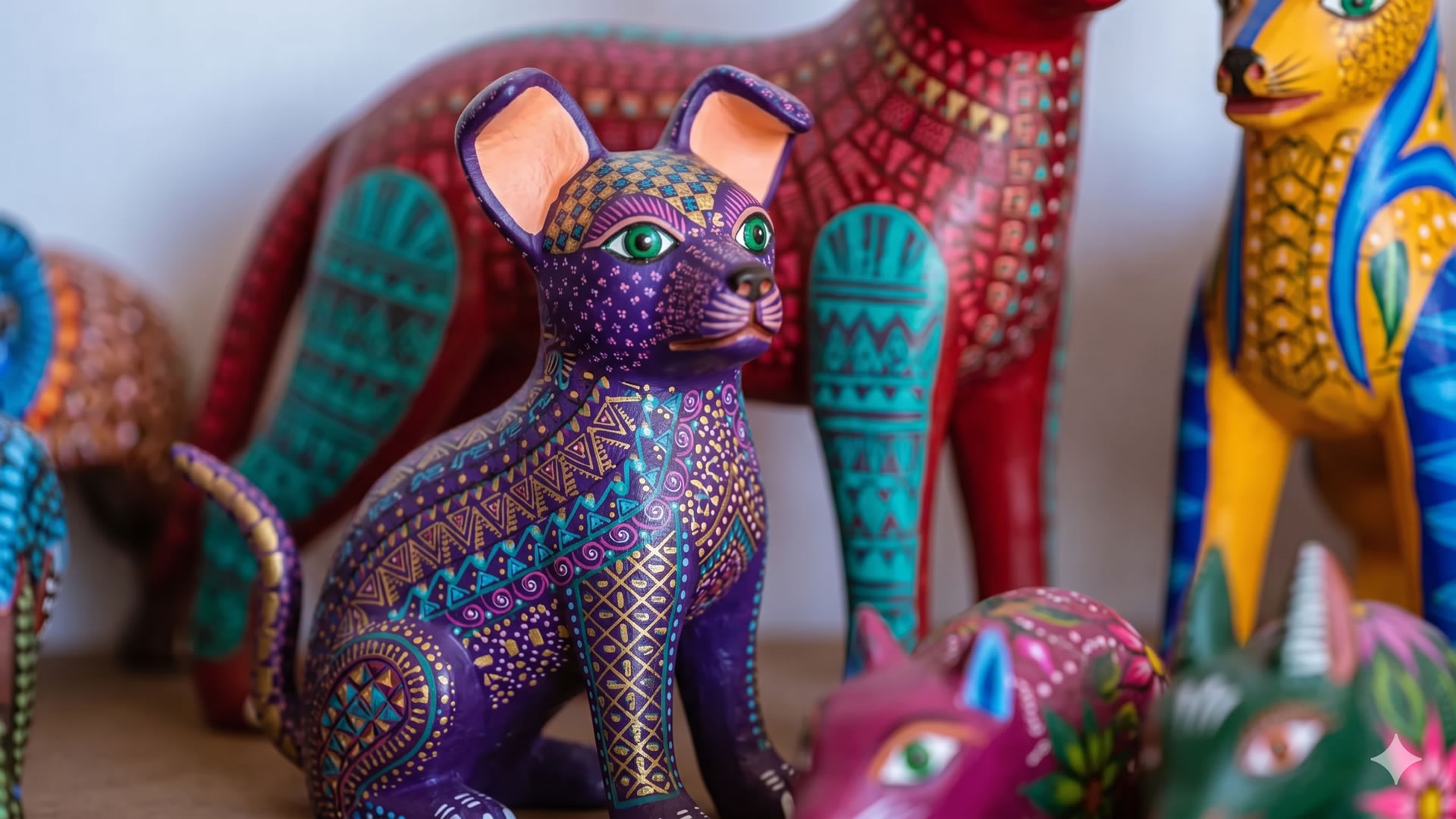
In the 1980s British filmmaker Judith Bronowski brought Pedro Linares together with Oaxacan woodcarvers for workshops in the United States. One of those carvers was Manuel Jiménez from the small Zapotec village of San Antonio Arrazola. Inspired by the papier-mâché creatures, Jiménez began carving similar fantastical figures from the soft, fragrant local copal wood. He was the first to transform the dreamlike idea into the three-dimensional wooden sculptures we know today.
Arrazola quickly became known as the cuna, or cradle, of Oaxacan wooden alebrijes. For years Jiménez and his family held something close to a monopoly on the craft, and the village’s reputation spread.
Arrazola and San Martín Tilcajete: Two Villages, One Tradition
While Arrazola holds the honor of being first, the craft soon spread to neighboring San Martín Tilcajete, where families like the Melchor and Cruz began producing their own distinctive styles. Today the two villages share the same Zapotec roots and work in harmony. Arrazola remains quieter and more intimate, perfect for personal visits and conversations with artisans. Tilcajete offers a larger scale with more workshops and occasional lively alebrije fairs. Both towns produce extraordinary pieces, but many travelers say the most authentic and heartfelt experience is found in the birthplace itself.
A Day in Arrazola: The Full Experience
Visiting San Antonio Arrazola feels like stepping into a living workshop. The village is small, friendly, and just a short drive southwest of Oaxaca City. Families open their homes and patios so visitors can watch the entire process: men carving the copal wood with machetes and chisels, women and children sanding the pieces smooth, and everyone painting the vibrant patterns and colors that bring each creature to life.
You can wander from one workshop to another, ask questions, and often see the artists at work. The atmosphere is warm and unhurried, with none of the pressure sometimes found in busier tourist spots.
Meeting the Artisan Families
The Jiménez family remains at the heart of Arrazola. Descendants of Manuel Jiménez, including his son Isaías, maintain the family home and workshop as a small museum where you can learn the full story and see early pieces. Other respected families such as Sergio Santiago and Lucila Sosa welcome visitors with the same generosity. Each workshop has its own style, from playful and whimsical to highly detailed and intricate.
Shopping for Alebrijes: What to Expect and Prices
Buying directly from the families in Arrazola is one of the best parts of the visit. Prices are significantly more reasonable than in city shops or even Tilcajete. Small pieces start around 100 to 300 MXN, while medium figures range from 500 to 1,500 MXN. Larger, more elaborate works by master carvers can cost several thousand pesos. Quality varies with size and detail, but everything is handmade with care. Cash is preferred, and gentle bargaining is common and respectful.
Every alebrije you take home carries the spirit of the village and the hands that carved it.
Make Arrazola Part of Your Oaxaca Adventure
A visit to Arrazola is more than shopping for souvenirs. It is a chance to connect with living tradition, meet the families who keep the magic alive, and understand why these mythical creatures have captured hearts around the world. Many of our guests combine Arrazola with a stop in Tilcajete or a market day for the perfect blend of culture and color.
On our private tours at Luis Ramirez Tours we can easily include a relaxed morning or afternoon in Arrazola. Our comfortable transportation and local guides make the experience smooth and meaningful, so you can focus on the wonder of the alebrijes and the warmth of the people who create them.