

The Procesión del Silencio in Oaxaca: A Solemn Good Friday Tradition
An Introduction to the Procesión del Silencio
The Procesión del Silencio, or Procession of Silence, stands as one of the most profound expressions of faith during Semana Santa in Oaxaca. Held on Good Friday evening, this solemn event draws locals and respectful visitors into a shared moment of reflection and mourning for the death of Jesus Christ.
Unlike more exuberant celebrations elsewhere in Mexico, Oaxaca’s procession emphasizes quiet contemplation. Participants move through the historic streets in near-total silence, illuminated only by candles and lanterns, creating an atmosphere that invites deep introspection.
This tradition offers a powerful glimpse into the spiritual heart of Oaxaca, blending colonial-era Catholic practices with the region’s characteristic reverence and community spirit.
Historical Origins
The roots of the Procesión del Silencio trace back to Spanish colonial traditions introduced in the 16th century. Similar silent processions originated on the Iberian Peninsula, where penitents performed public acts of atonement during Holy Week.
In Oaxaca, the modern form of the procession has been documented since the early 20th century, though its practices draw from much older colonial rituals. Neighborhood religious brotherhoods, known as cofradías, organize and maintain the event, passing responsibilities through generations.
Over time, the procession has remained remarkably consistent, preserving its solemn character amid Oaxaca’s rich cultural landscape. It reflects both the deep Catholic faith brought by Spanish missionaries and the introspective nature of local observances.
The Capirotes: Symbolism and Meaning
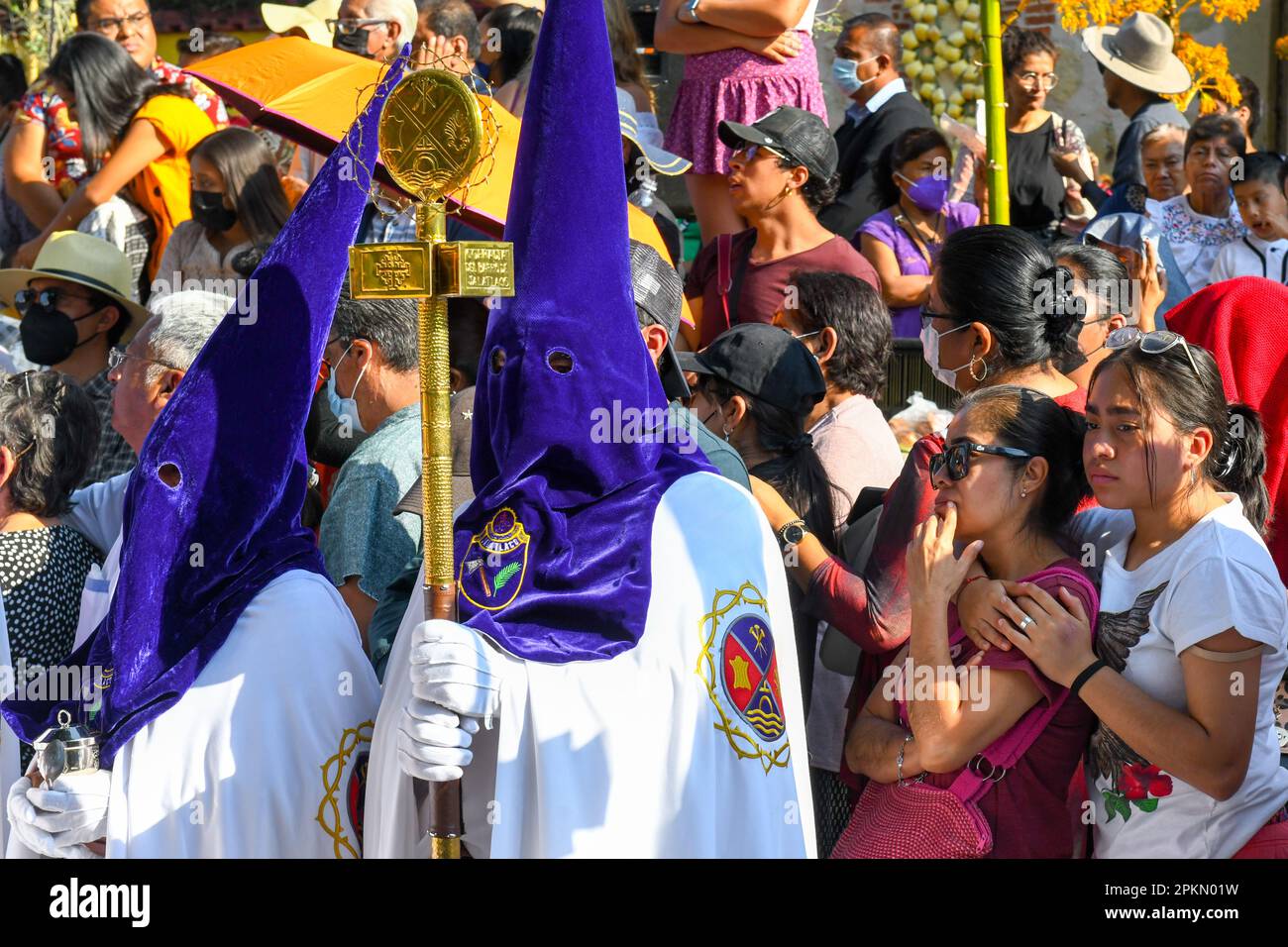
One of the most striking elements of the procession is the capirote, the tall, pointed hood worn by many penitents. These conical coverings, paired with long robes, allow participants to remain anonymous during their acts of penance.
The capirote originated in Spain during the Inquisition era, when those performing public penance wore similar garments to conceal their identity and focus attention on their repentance rather than themselves. The pointed shape is said to symbolize reaching toward heaven.
In Oaxaca, penitents typically wear purple or black robes with matching capirotes, colors associated with mourning and sacrifice. The anonymity fosters humility, ensuring that the devotion remains directed toward faith rather than individual recognition.
Women often participate in different roles, wearing traditional black mourning attire or veils, while carrying banners or accompanying religious images.
The Profound Significance of Silence
Silence forms the very essence of this procession. Participants maintain strict quiet, broken only by the rhythmic sound of footsteps, occasional church bells, or the muffled beat of a drum. This absence of sound creates a powerful space for personal reflection on Christ’s suffering and death.
The event commemorates the sorrow of Good Friday, inviting everyone present to contemplate themes of sacrifice, redemption, and mortality. For many locals, it represents a profound act of communal mourning and spiritual renewal.
Even spectators are encouraged to observe in silence, enhancing the shared sense of reverence. This collective quiet transforms the city’s bustling streets into a moving meditation.
Schedule and Timing for 2026
In 2026, Good Friday falls on April 3. The Procesión del Silencio traditionally begins around 6:00 PM (18:00 hours) as dusk settles over the city.
The procession lasts several hours, typically concluding late in the evening. Timing can vary slightly year to year based on organizational details, but arriving early ensures a good viewing spot along the route.
The dimming light and emerging stars add to the atmosphere, with lanterns and candles providing the primary illumination.
The Route and Key Locations
The procession typically starts at the Templo de la Preciosa Sangre de Cristo in the historic center. From there, it winds through some of Oaxaca’s most iconic streets.
A common route proceeds up Macedonio Alcalá, crosses over side streets, descends García Vigil, reaches Independencia, and circles back through the heart of the city. Key landmarks include the Cathedral, Santo Domingo, and the Zócalo area.
Religious statues from various parish churches are carried along the path, each accompanied by its dedicated group of penitents and bearers.
What to Expect and Visitor Tips
As night falls, hundreds of hooded figures emerge, carrying lanterns, banners, and sacred images. The slow, deliberate pace allows for quiet observation of the intricate details—elaborate robes, flickering candlelight, and expressions of devotion.
Visitors should dress modestly and comfortably, with sturdy shoes for standing on cobblestones. Maintain respectful silence, especially as groups pass. Photography is generally acceptable from a distance, but avoid flash or intrusive shots.
The experience can feel intensely moving, even for those outside the faith tradition. It offers a rare opportunity to witness living cultural heritage in its most authentic form.
A Personal Invitation
Having guided many visitors through this profound tradition over the years, I find the Procesión del Silencio to be one of Oaxaca’s most unforgettable experiences. If you plan to attend in 2026 and would like local insights or assistance in navigating the evening, I would be honored to help. Please reach out via the contact form on my website.